It is easy to think of AI as a kind of miracle machine that might have a will of its own. That it might have opinions, or creativity, or designs on our jobs, or the means to end the world entirely. What I have noticed is that a person's opinion about AI is almost always a proxy for their opinion about humanity. Consider what a large language model, the kind of AI people usually mean, is made of. Almost everything we have ever written down. Every debate, every apology, every piece of propaganda, every love letter, every Twitter flame at two in the morning. The model did not invent contempt or tenderness. It learned them from us. Which is why credit and blame do not belong to AI. Innocence and guilt do not attach to a tool. When it goes wrong, the hand on it was ours all along. A hammer cares not one bit about the nail, just as ones and zeros do not care about our future. Optimists describe something that extends what humans can achieve. Cynics describe an accelerant for manipulation, or the means of our destruction. Both are revealing their estimate of us, and both are largely right. Most generations get an existential crisis that threatens humanity: plagues, crusades, world wars, genocides. My generation's was the bomb. In 1983, ABC aired The Day After, a movie about nuclear destruction set in Lawrence, Kansas. Not Washington or New York. Middle America, so nobody watching could tell themselves it was a story about somewhere else. More than a hundred million people watched it, close to two-thirds of every television in use that night. I was 16, at home with my family, and when it was over, we all headed to bed in complete silence. It was devastating. How could humanity be so stupid? It was all anyone talked about the next day at school. Some tried to shrug it off to be cool, but the bomb clearly affected our generation. Our music had a pervasive theme of doomsday scenarios and nuclear destruction references: Dancing with Tears in My Eyes, Forever Young, 99 Luftballons, It's a Mistake, Two Tribes, World Destruction, Russians. But I don't think most of us lay awake afraid of fission itself. The fear was of the judgment of the people at either end of the chain of command, and whether any of them was having a bad night. What none of us watching knew was that it had already nearly happened, eight weeks earlier. On September 26, 1983, a Soviet early warning system reported American missiles inbound. The duty officer, Stanislav Petrov, had minutes and a protocol telling him to send it up the chain. He decided the system was wrong and logged a malfunction. He was human, and he was right. Four years before that, at three in the morning on November 9, 1979, the missile warning screens inside Cheyenne Mountain showed a full Soviet launch. The same picture came up at the Pentagon and at Strategic Air Command. Interceptors went into the air. Zbigniew Brzezinski was woken and told the country was under attack, and by Robert Gates's account, he did not wake his wife, having worked out that everyone would be dead inside the half hour. He was reaching for the phone to call President Carter when a third call came through saying the warning was false. Somebody had loaded a training tape into the live system. Here's what those two nights have in common. In 1979, a person fed bad data to a machine, and the machine believed him, exactly as built. In 1983, a machine put bad data in front of a person, and the person refused to believe it. Human data going in, human judgment coming out, and at no point in either story did the equipment want anything at all. A hundred million of us no longer gather in the same way. Perhaps for Gangnam Style or Taylor Swift, but it is hard to get a hundred million people to focus on such a devastating message today. Our divided populace would decide the message's value before it even started, just by looking at what outlet was airing it or who was starring in it. The internet was supposed to make us one village. We took a tool that let anyone speak to anyone and used it to sort ourselves into camps and throw things across the divide. That was not a failure of the tool. We had the option to do something else, and we did not take it. In my opinion, we have largely failed that test. I would like us to pass this one. I think what people are actually afraid of is what this mirror is going to reflect back at us: confirmation that we are exactly as petty and self-destructive as the worst version of the record suggests. That fear is reasonable. What we do with it is not. Instead of sitting inside the discomfort long enough to let it change something, we hand it off. We blame "society," or an "algorithm," or a faceless intelligence somewhere in the near future. We keep the problem abstract because abstract problems do not ask anything of us. We don't have to take any personal responsibility, because we have decided it is beyond our control. We have been conditioned to this fear. Ever since the 1950s, we have grown up on a steady diet of science fiction that tells us to be afraid of technology: Gog (1954), 2001: A Space Odyssey (1968), Westworld (1973), Logan's Run (1976), The Matrix (1999), Ex Machina (2014), and the oft-cited Terminator (1984). Just try getting through a conversation about AI without someone invoking Skynet! I love all these movies. However, they are just movies, not prophecies. I would argue most of these movies comment more on humans overcoming hubris and adversity than on technology. And notice what never comes up in the science-fiction-based fear analogy, the one where the machine surveys humanity and renders a verdict. Nobody in that conversation asks the obvious follow-up: what would we have to become for the verdict to go the other way? Their framing focuses on restraining the output rather than the input, which is to say, people becoming more worthy. There is no sentience in the machine. There is no god in the machine. There is just us. These systems learn from us. We are the curriculum. Not as a metaphor. Every exchange, every choice of contempt over curiosity, every time we took the cheap dunk instead of the intelligent debate, all of it is weighted in there now. Petty cruelty used to be forgettable. It is not forgettable anymore. It is training data, and the last time somebody loaded the wrong training material into a live system, we had six minutes. The larger part of the solution is smaller and harder than any policy. Regulation can limit the damage, and safety boards can catch failures, but neither can make us wiser. Nor can an open letter signed by profit-motivated executives who may do the opposite next quarter. There is still a small personal price for each of us to pay. The next time you are about to post the sentence that gets a laugh at someone's expense, don't. When you disagree with someone, consider their strongest point instead of their worst sentence and debate them. When you are wrong in public, say so in public. If we want AI to show empathy, understanding, and intelligence...we all need to start to change the input. Those sound too small to matter, but they are now the entire curriculum. We are not a stupid species. We are a frightened one, and frightened things hoard, divide, and lash out. But we are also the species that, minutes from the end of the world, decided not to believe the machine. If you want to be worth saving, be something worth saving. Not society. Not the algorithm. You, in the next thing you write down.
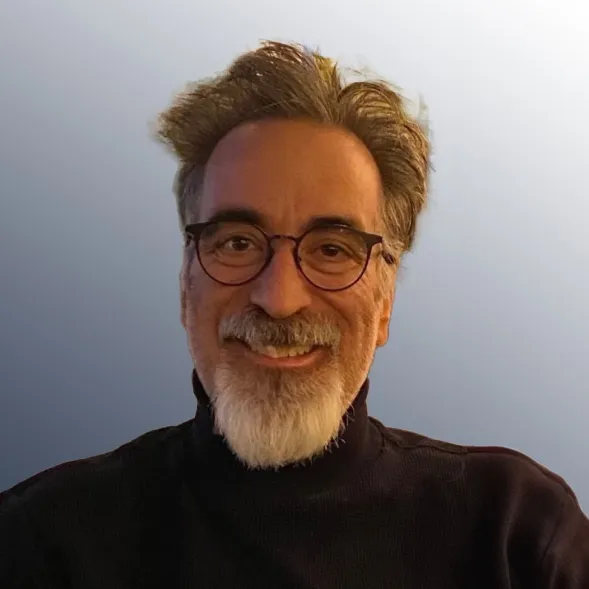
Christopher D'Angelo
I build amazing things: content, studios, AI. Ex-Google, Spotify, LeapFrog, Universal Studios, founded Leonardo Learning.
I have failed a lot... so why would you want to talk to my AI?
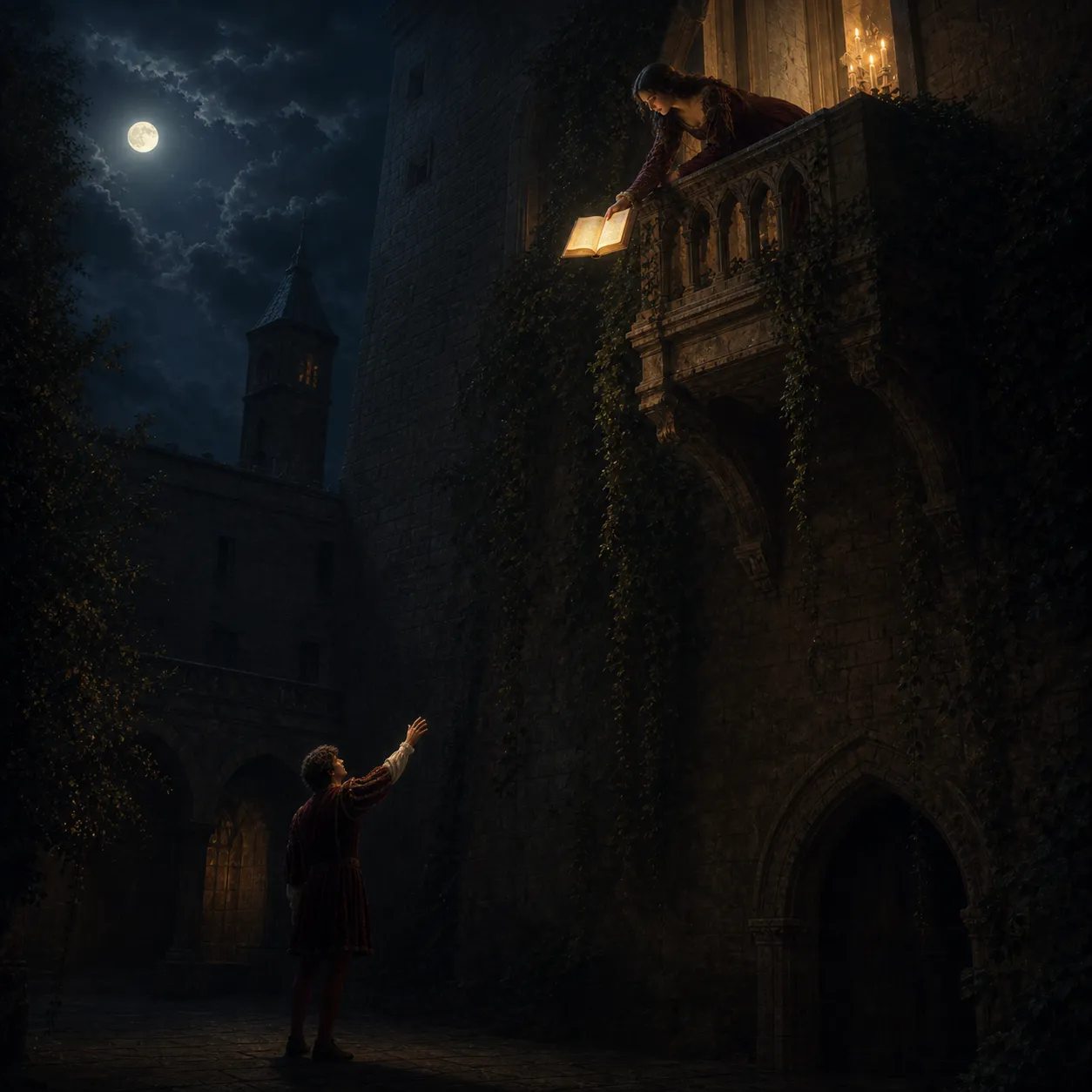
What If Books Could Meet Us Where We're At?
One of my mentors, George Brenner, took me to lunch one afternoon at the Universal Studios commissary. I already knew the room. Everyone did. It had a definite hierarchy. Junior people sat near the entrance. The deeper you went, the higher up you went, and the more weight you carried. At the very back, in a booth they occupied every single day, sat Lew Wasserman and Sid Sheinberg. The two most powerful men in Hollywood. People scheduled their lunch around being in the same room as them. George walked me in and kept walking. Past the junior tables. Past executives who outranked me by decades. With every step, I felt my own status rewrite itself in real time. He never said a word. He didn't have to. By the time we reached the back of the room, I was genuinely stunned. "Lew, Sid," he said, "this is the new media kid I told you about." That was it. Here's what I've thought about for the thirty years since. That moment meant nothing to Lew and Sid. They probably forgot it before they finished their meal. It likely didn't register much for George either. A small flex. A brief introduction. A lunch. But it changed my entire career. It changed my entire understanding of where I was capable of reaching. One asymmetric moment that cost George nothing and gave me everything. That's what silent mentorship looks like: a piece of your own credibility, handed off so casually you forget you gave it, carried by the other person for the rest of their life. Not long after, new management came in and redesigned the commissary. They flattened it. No more risers, no more geography of status. Everyone on the same level, democratized, modern. I'm sure it felt like progress, like a new beginning. But the room that had taught me what ascension looked like, one step at a time, was gone. And I've always wondered how many people since then walked in for lunch, sat anywhere they wanted, and never felt a thing. That's the hidden truth about mentorship nobody talks about. The moments that rewire someone completely are often invisible to the person creating them. Places change. The mentor moves on. But the mentee carries it with them for decades. So every time you're in a position to walk someone through the room, you probably won't even remember doing it. But they will. They'll remember every step.
What Lew Wasserman's Old Hollywood Commissary Taught Me About Mentorship
Everyone at Google knew the phrase "Move fast and break things." It got repeated in meetings, put on slides, worn like a badge of honor. But most people stopped there. The full spirit is to move fast, break things, learn from what broke, and iterate until it is amazing. Not as fun to quote, I know, but that last part is the whole point. The breaking isn't the goal. The breaking is just what happens when you're moving fast enough to find the edges of what's possible. The ones who actually built things that lasted at Google, at Spotify, at every place I've been...they were the ones who stuck around after the break. The truth is that while many quoted it, they were terrified of failing... and iteration opens one up to the possibility of repeated failure. I watched a lot of people use "move fast" as a cover for not properly thinking through their vision, or worse, abandoning it before it ever had a chance to succeed. The phrase gave people permission to appear brave without actually risking anything. Great ideas are rarely manifested on the first try. Speed without learning is just chaos. Learning without speed is just theory. That middle part, the iteration, is where the actual courage lives and where ideas actually earn their right to last.
"Move Fast and Break Things" Was Never the Whole Idea
Build the Vision, Then Blow It Up
Discover more content and chat further with Christopher D'Angelo, or on
By using this service, you agree to the Terms of Service and Privacy Policy.