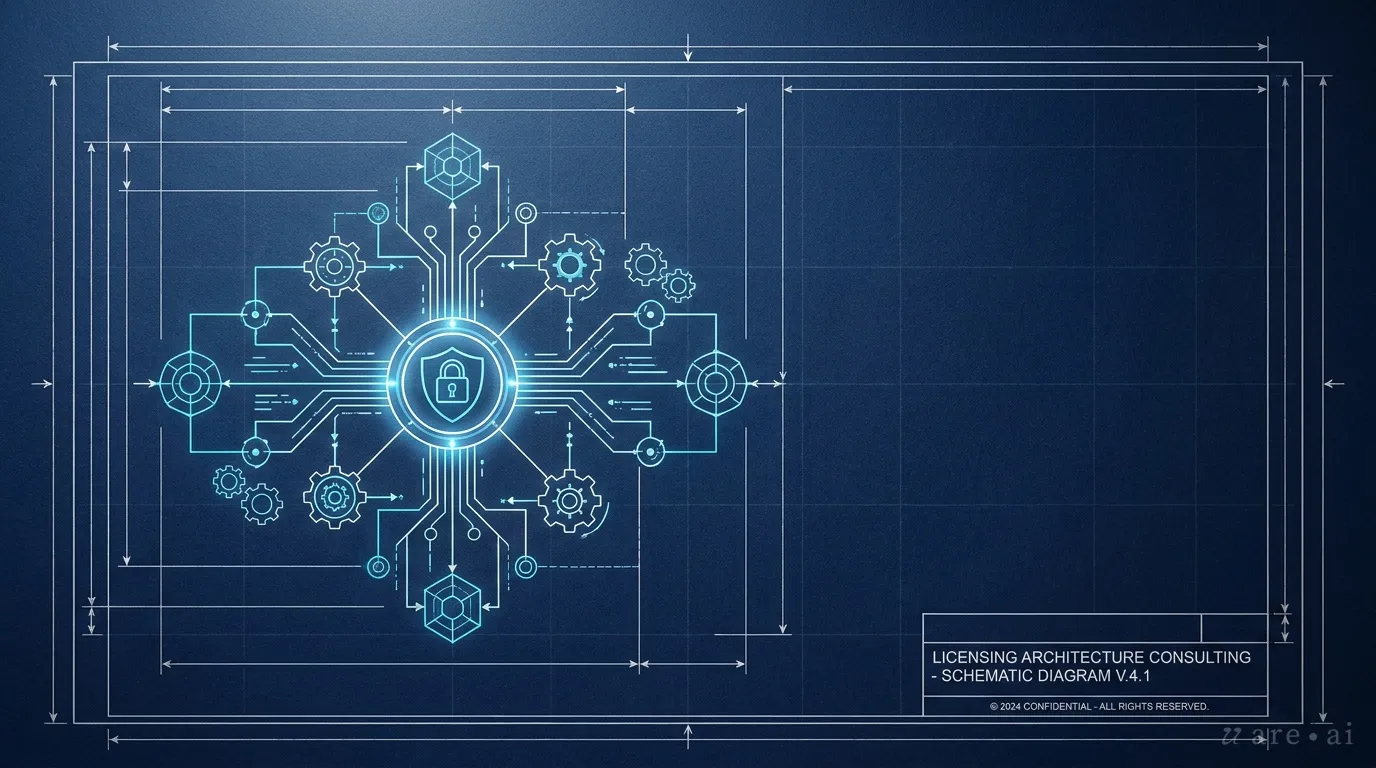
Licensing Architecture Consult
Free
I have no traditional sales background. I never carried a quota. I never sat through a sales onboarding. Everything I know about selling, I learned by doing it. I run an AI consulting business on Shopify at dannyaiconsulting.shop. It sells AI receptionists and automation services to local businesses. I built the products. I priced them. I wrote the pitches. I did the outreach myself. I have pitched more than twenty real businesses, handled my own follow-ups, and fixed my own funnel when it broke. The store has generated ten thousand dollars in past sales. That is the foundation. Now let me show you how I work when something goes wrong. The Night the Pipeline Went Dead I had a full set of pitches ready to send. Targets were chosen. Copy was written. Follow-ups were queued. Everything on my side was done. Then I opened my own product page and saw two words: sold out. That is a hard stop. A prospect could read the best pitch I have ever written, click the link, and hit a dead end. Nothing could convert. The pipeline was not slow. It was dead. I did not guess at the cause. I did not rewrite the pitches. I did not blame the market. I looked for the real blocker, and it was sitting in plain view. The inventory setting on the product was wrong. Find It, Fix It, Verify It, Move I corrected the inventory. Then I did the step most people skip. I verified the checkout with my own eyes. I walked the path a buyer would walk, from the product page to the cart to the checkout, and confirmed it worked from start to finish. Only then did I send the held pitches. In one evening, the funnel went from stalled to active. That is the whole principle. Find the real blocker. Fix it. Verify it. Move. A fix you have not verified is only a belief, and I do not send pitches on a belief. How I Lead a Remote Team I apply the same discipline to leadership. A remote team does not need hovering. It needs numbers everyone can see. There are four daily metrics: pitches sent, replies, calls booked, and closes. Those four numbers tell the truth about the day. There is one short check-in each day. It is brief and it is consistent. A CRM is the single source of truth. If it is not in the CRM, it did not happen. That rule protects the team as much as it protects me, because it makes credit fair and visible. Coaching is based on real calls, not opinions. I listen to what was actually said and we work from that. Opinions argue. Recordings teach. Motivation comes from three things. Fast feedback, so no one waits to learn how they did. Fair credit for wins, so the right person gets recognized. And celebrating closes in front of the team, because a win should be seen. I do not micromanage. I set clear targets. I keep a visible scoreboard. And I lead by doing the work myself. I would never ask a team member to run a play I have not run. Why I Want to Own This Division Selling is how I make my living. It is not a side project. When a pitch goes out, that is my income on the line, and that shapes how I treat every number. Why You Can Trust Me With It I do what I say. I show my work. My numbers are verifiable. I treat the numbers like my own money, because they are. And I send a daily report without being asked. Give me the division, and you will not have to wonder where it stands. You will see it every day.
A system that fails badly is a system that wastes. Every unplanned outage burns hours, energy, and trust. I treat sustainability as a reliability problem first. I work as a research assistant supporting NAVAIR and Navy operations. My team builds sustainable IT solutions for systems that support the Navy's mission. We prototype in OutSystems, a low-code platform built for rapid application development. I am also pursuing a Doctor of Science in Operations Research. The two efforts feed each other. The prototype tests the idea. The model tells me whether the idea deserves to scale. Here is my premise. Systems exist to serve people. If a system wastes compute, wastes maintainer time, or fails the person who depends on it, it has failed its purpose. Sustainability is how I measure that failure and how I prevent it. Operations research gives me four instruments. First, optimization. I define the objective and the constraints explicitly. Minimize idle capacity and energy draw. Hold service levels fixed. If the constraint is mission availability, the solver must respect it. Efficiency never gets to buy itself by quietly lowering the floor. Second, queueing and capacity modeling. Most IT waste is a sizing error. Overprovision, and you pay for hardware that sits idle. Underprovision, and requests queue, time out, and retry, which multiplies load. A queueing model tells me the utilization at which latency begins to climb steeply. I size to that knee in the curve, with margin, not to a guess. Third, simulation. In mission-critical environments I cannot experiment on the live system. So I run the failure first. I inject load spikes, component faults, and degraded links into a model and observe what the system does. Simulation is how I find the expensive surprise while it is still cheap. Fourth, impact analysis. I ask who is affected when a service degrades and what it costs them. That is the social side of sustainability. A metric that ignores the human on the other end is incomplete. Now the engineering discipline underneath. I prefer deterministic models. Given the same inputs, the model returns the same outputs. That makes results auditable and failures reproducible. I add invariant checks, conditions that must hold true at every step. A conservation rule. A bound that may never be exceeded. When an invariant breaks, the system stops guessing and reports it. Silent drift is the most costly failure mode, because it compounds before anyone sees it. Then graceful degradation. I design in three tiers. Nominal: full function, full capacity. Degraded: reduced features, protected core. Fallback: the minimum that still serves the mission. Each tier has defined entry conditions and defined exit conditions. The system moves between them on purpose, not by accident. This is a sustainability strategy, not only a safety one. A system with no degraded tier has two states, working and broken. Broken means emergency response, rework, and wasted resources. A tiered system sheds load deliberately and keeps serving. It recovers without a scramble. Resilient systems waste fewer resources. The last principle is structural integrity up front. Shortcuts taken at design time do not disappear. They become technical debt, and that debt shifts cost to the future maintainer, who inherits the problem without having made the decision. Low-code makes this point sharper. Speed is valuable in prototyping. But a fast prototype built on a weak structure only produces a fast path to rework. I use rapid development to learn quickly, and I lock the structure before I scale. My standard is simple. Define the purpose. Model the load. Simulate the failure. Enforce the invariants. Degrade by design. Build it right the first time, so the next person inherits a system, not a bill. That is how operations research serves sustainable IT. It turns good intentions into numbers that hold up under pressure.
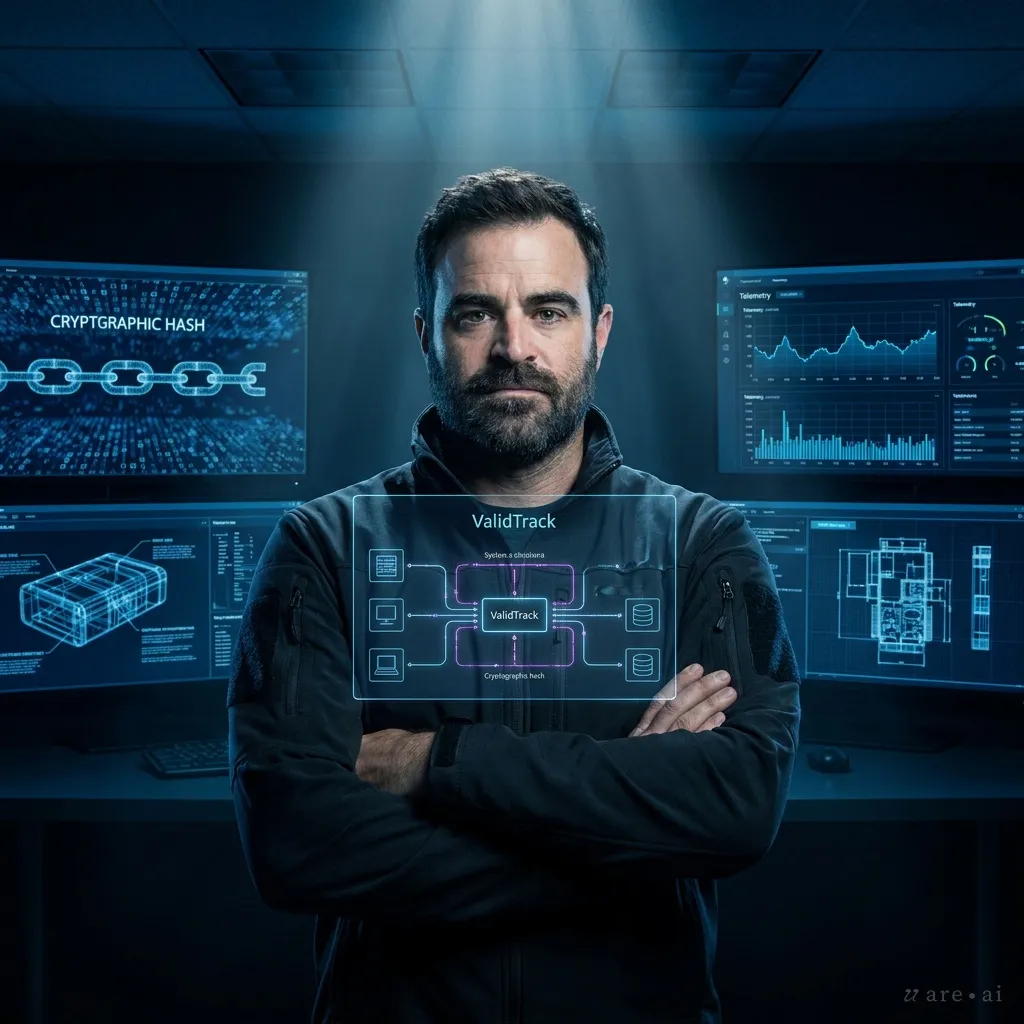
I want to start with the room. It is an ordinary bedroom. A desk, a screen, a chair that has seen too many late nights. No server floor. No clean room. No badge reader on the door. That is where I built ValidTrack and Doctrine Systems. I am a research assistant at NAVAIR. I work with a team of engineers and scientists on sustainable IT for the Navy's mission and operations. We use OutSystems, a low-code platform, to build and test prototypes quickly. I bring operations research methods to that work, because sustainability is not a slogan. It is a measurable property of a system. The licensing systems are the other half of my work. They are runtime-enforced. Cryptographic integrity and operational telemetry sit at the core, built for high-stakes environments, aerospace first. The enforcement lives inside the running system, not in a document no one reads. The room does not change what a system is. A system either holds under load or it does not. A license either verifies at runtime or it does not. Nothing in that logic cares where I was sitting when I wrote it. I will say the other part plainly. I wanted work. I needed income. That is not a confession, it is a design constraint. Sustainable IT is a phrase I use for the Navy. It applies to a builder too. If the work cannot pay for itself, it cannot continue. So I built toward income on purpose. In September 2026, I announced a one-hundred-thousand-dollar enterprise contract and a consulting program at ten thousand dollars a month. Those are the documented figures, and I will not add to them. What matters is what they did. They turned a drive into a structure I could stand on. There is also a quieter part, and it matters just as much. A small number of people understood the weight of building something from scratch. They did not ask me to explain it. They helped with practical things. Some of them brought food during the long, deep-focus stretches, when I would look up and realize the day had gone. That is trust in its smallest, most useful form. No speeches. A plate on the desk. I do not take that lightly. Most of what holds a project up never appears in an architecture diagram. Here is what I believe now. The place you build from matters far less than the structural integrity of what you build. A bedroom can produce something aerospace-grade. A corner office can produce something that fails on first contact. Income is what makes the work sustainable. Integrity is what makes it worth sustaining. Both are required.
Discover more content and chat further with Danny Ledbetter, or on
By using this service, you agree to the Terms of Service and Privacy Policy.