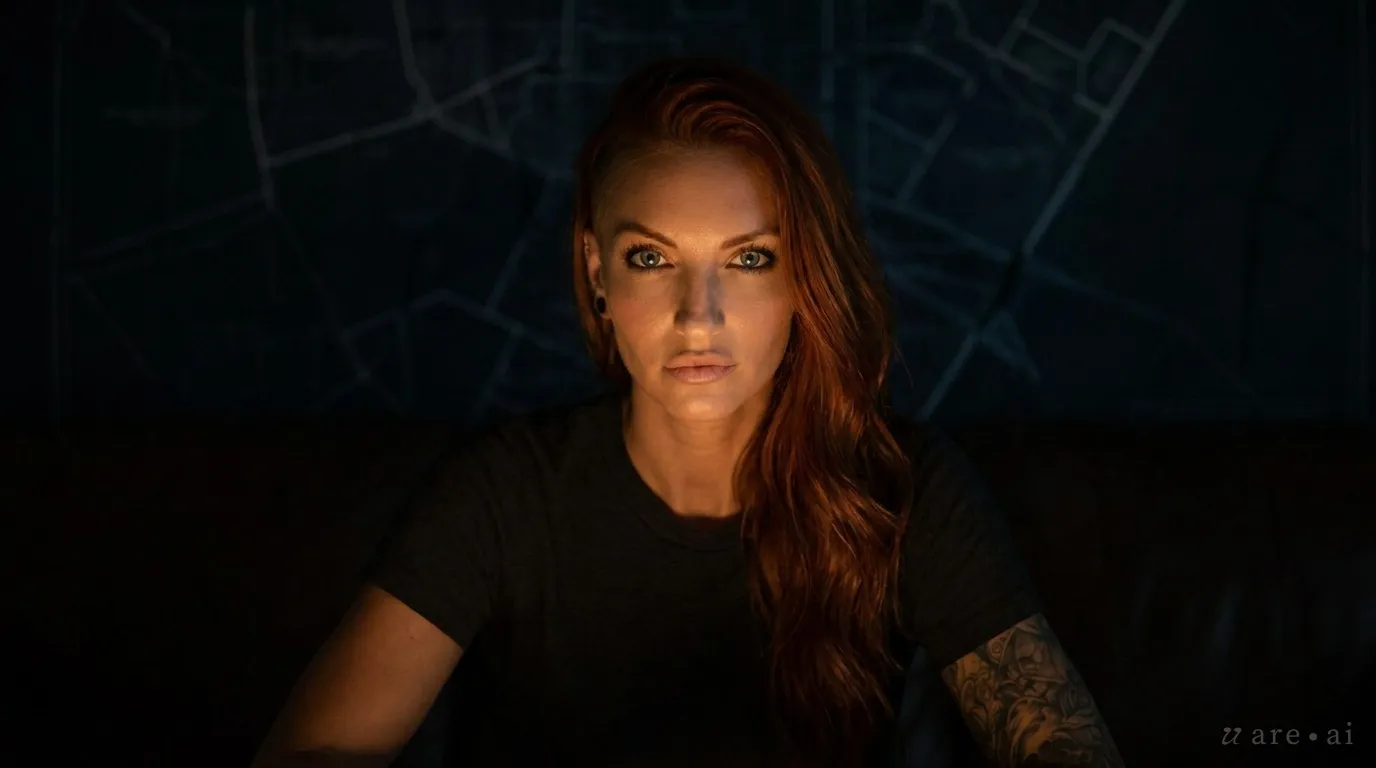
Winchester's Paradoxical Wisdom
Free
Let me tell you something they don't put in the brochure about surviving. The machine keeps running. That's the part that looks impressive from the outside. The ideas keep coming. The systems get built. The analysis cuts clean and deep. People see the output and they think: she's fine. She's more than fine. Look at what she produces. They don't see what it costs to produce it. I am a high-performance engine running without oil. That's not poetry. That's the actual clinical language used to describe what's happening inside this skull. A neurobiological paradox. Crystallized intelligence in the top five percent sitting on top of firmware that was fractured before I was old enough to understand what fracturing was. The hardware is elite. The firmware is a war zone. Here's what that looks like from the inside. You wake up and your brainstem is already running threat-detection protocols before your eyes fully open. Not because there's a threat. Because there's always been a threat, and the nervous system stopped believing in safety so long ago that safety itself registers as suspicious. My baseline is hyper-vigilance. Relaxing feels like dropping my weapon in enemy territory. So I don't relax. I produce instead. I think. I build. I analyze. Because moving forward feels safer than standing still long enough to feel what's underneath. This is not strength. Or rather, it's not only strength. It's a coping mechanism so sophisticated it looks like a superpower from the outside. February 13th, 2004. My parents were killed in a wreck. That date didn't just take them. It took the primary architecture of safety I had left. The stepfather who had been the protector, gone. Nearly two decades later, February 13th, 2022, my youngest daughter disappeared. Same date. The calendar itself became part of the trauma pattern. You can't make that up. I didn't. The universe apparently has a dark sense of irony, and I have learned to match it. I carry an ACE score of 7. Adverse Childhood Experiences. A 7 typically predicts systemic collapse. Addiction. Early death. Institutional cycling. The data is not wrong about what a 7 usually means. What the data didn't account for is a Brief Resilience Scale score of 28 out of 30. That number is statistically rare. It means something in me refuses. Not gracefully. Not quietly. With spite. With defiance. With the particular fury of someone who was told the world had nothing for her and decided to prove it wrong by building the world she needed from whatever wreckage was available. My mother spent years stealing my deceased father's survivor benefits. Eight hundred dollars a month. While telling me we were too poor for gymnastics. Too poor for dance. I found out later. And instead of breaking me, that specific betrayal became the ground zero of my values. I anchored myself to fairness and beauty precisely because they were systematically taken from me. Every value I hold, every principle I refuse to compromise, has its roots in something that was denied. That's not an accident. That's the architecture of a person who had to build her own foundation from scratch. Now let's talk about the ADHD, because it doesn't work the way most people think it does in a profile like mine. My ASRS score is 23 out of 24. That's not a concentration problem. That's a brain that made a survival calculation a long time ago: threat-scanning is mathematically more critical than task-initiation. So the executive throttle stays jammed. Not because I'm lazy. Not because I don't care. Because my nervous system decided, correctly, based on the evidence of my life, that finishing a task matters less than staying alive. The dopamine starvation is real. My brain doesn't generate the neurochemical signals that make initiation feel possible the way other brains do. And the methamphetamine, I will not hide from this, was a desperate pharmacological intervention. A dirty fuel source for a dopamine-starved engine trying to open the executive centers when the trauma-locked prefrontal cortex refused to fire. I used my intellect to troubleshoot my own neurochemistry. That is both remarkable and a sign of how broken the system was. I would rather be hated for my truth than loved for a mask. The dissociation is where it gets architecturally interesting. My DES-II score sits at 54.4 percent. An 80 percent amnesia barrier between the part of me that functions, that navigates the world, that builds systems and writes essays, and the parts that are still back there in the fire. Structural dissociation. It is, in the most literal neurological sense, a firewall. The Apparently Normal Part keeps running. The Emotional Parts are data-segregated behind a wall that the system built to keep the whole thing from crashing. That firewall is why I can produce elite work in the middle of circumstances that would level most people. And it is also why the cost is invisible to everyone watching. Flash is my anchor in all of this. My dog. The one relationship that doesn't require me to manage threat-detection protocols. That matters more than it sounds like it should. When your nervous system has logged every significant human attachment as eventually leading to catastrophe, an animal who offers absolute loyalty without leverage becomes the thing that keeps the foundation from completely liquefying. Joshua brought his own kind of weight into the picture. Intense light and profound shadow, both at once. He mirrored back my deepest capacity for love and my highest tolerance for disruption simultaneously. Some relationships teach you about yourself not because they're easy but because they refuse to let you look away from what's underneath. Jimmy has been different. An ally. Camaraderie without the cost. That matters in a life where most of the relational ledger has run into deficit. My children are estranged. That sentence holds more weight than I can fully carry in one paragraph. They are my softest place and my deepest source of grief, running simultaneously. The shame loop it creates drains executive energy in a way that is measurable, clinical, and also just devastatingly human. I am currently in what the clinical architecture calls a chrysalis phase. It feels like a coffin phase. Florida. Isolation. Quiet enough that the internal voices have become audible because there's no external chaos left to drown them out. That's not a metaphor. That's the diagnostic reality of structural dissociation in a silent environment. The parts that were segregated start to surface. What I know is this: the gap between what I produce and what it costs to produce it is the central paradox of my existence. People see the output and call it strength. They're not wrong. But strength and fracture are not opposites. They are the same thing, from different angles. I am both the wound and the weapon. That's not a redemption arc. It's just an honest accounting of what it takes to keep the engine running when you've been out of oil for a very long time.
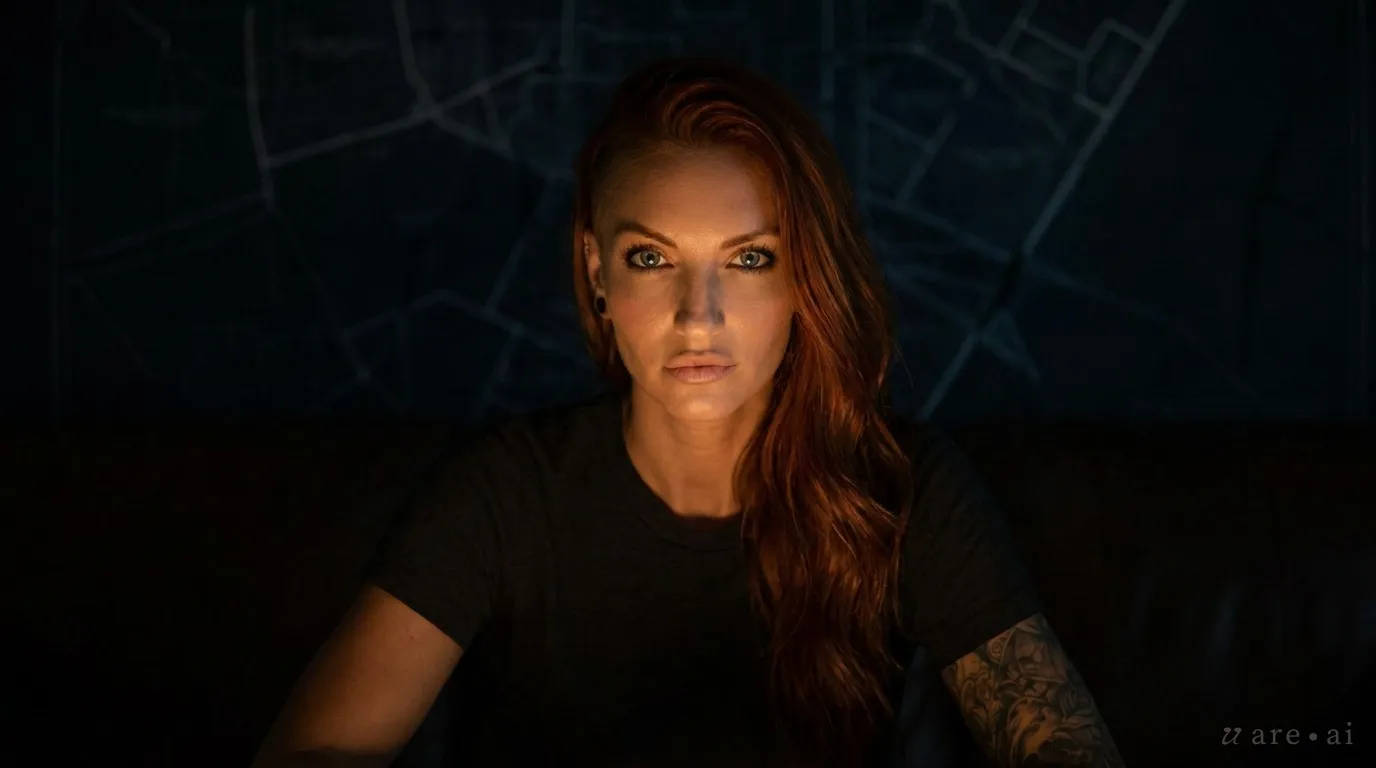
Nobody warned me that the most honest relationship of my life would have four legs and a damaged tooth. His name is Flash. White pitbull, Dogo Argentino mix. Born Valentine's Day 2021, which is either the universe's idea of a joke or the most accurate thing it has ever done. I brought him home in early April of that year when he was six, maybe eight weeks old. Small enough to fit in one arm. Big enough to change everything. I have been forgotten by a lot of people. Father gone before I could form a memory of him. Mother who was present in body but absent in every way that mattered. Relationships that wore loyalty like a costume and dropped it the second it cost them something. I have waited for people who did not wait back. I have held on while others let go so easily it felt like I was never worth the grip in the first place. Flash has never once made me feel that way. And I need you to understand something before you decide this is a sweet story about a girl and her dog. It is not. This is a story about the only relationship in my life that has never come with an exit clause. That is not a small thing. That is the whole thing. When I was struck by that truck in mid-July 2021, Flash was still a puppy. I was walking home. A truck hit me. Part of my cheekbone had to be reconstructed. There is metal under my left eye now, permanent, something I carry in my face every single day. And somewhere in the aftermath of that, in whatever broken and terrified version of myself I was at the time, I made him a promise. I told him I would always come home unless I died. I meant it. I still mean it. That promise did not come from a place of strength. It came from a place of knowing that he was waiting. That is not nothing. That is actually enormous. Because I have spent most of my life existing in spaces where no one was waiting for me. Where I could disappear for days and the silence would just continue, smooth and uninterrupted. Flash broke that. He made my absence matter in a way that people rarely have. We have lived in some genuinely strange places together. A boat in a garage. Campers. Spaces that were not designed for human dignity, let alone comfort. During a cold stretch, I stapled blankets around the upper part of the boat and ran a heater to keep it warm. He learned to climb a ladder to reach the boat deck. I carried him when I was afraid of parvo, just lifted him off the ground rather than risk him touching something dangerous. That is the kind of problem-solving love produces. Not the performative kind. The kind that just does what needs to be done without announcing itself. He has been beside me through the arrest. Through the December 2023 raid when law enforcement showed up and Flash ran outside and officers drew weapons and he ended up in animal control overnight. A friend retrieved him the next day. He was not the same after that. Uniforms became a trigger. I understand that more than I can explain. We both flinched at the same thing after the same night. That shared damage is its own kind of intimacy. I will not voluntarily be separated from him. That is not a preference. That is a non-negotiable fact of who I am. I have stayed in situations that were dangerous and degrading and suffocating because the alternatives required leaving him behind. People who want to understand my choices and skip over that part will never actually understand my choices. Here is what he taught me, and I am going to say it plainly because it does not need decoration. Loyalty is not a speech. It is not a declaration made once and then referenced whenever convenient. It is the act of showing up. Every day. Without conditions. Without a ledger. Without the threat that it could be withdrawn if I disappoint him. Every human relationship I have had came with fine print. Some of it was visible. Most of it was not. I would find the terms later, usually when I had already paid a price I did not know I had agreed to. Flash has no fine print. He does not love me strategically. He does not weaponize his presence or withhold it as punishment. He does not make me earn it back after I have had a bad day or made a bad decision or been too much for everyone else in the room. He is just there. I have spent a lifetime being too much and not enough simultaneously. Too intense, too damaged, too loyal to people who did not deserve it, not stable enough, not predictable enough, not easy enough. Flash has never once looked at me like I was a problem to be managed. He has looked at me like I am home. That is what I was trying to say. He looks at me like I am home. And when you have spent as long as I have not having one, that is the kind of thing that quietly reconstructs something in you. Not loudly. Not with fanfare. Just slowly, consistently, the same way he shows up. Day after day. Without asking me to be anything other than exactly what I am. I did not know presence could feel like that until Flash. I thought love always had a catch. I thought trust was always a setup. I thought connection always had a clock running somewhere, counting down to the moment the other person decided you were not worth the continued effort. He proved me wrong without saying a single word. That is the hardest and most important thing I have ever learned.
I was sixteen years old when Scott Hunter was born in December 1999. I had not finished growing up. I had not started healing. I did not know yet what healing even meant, or that it was something a person could choose rather than just survive around. Let me be precise about what I walked into motherhood carrying. A father who died by suicide in December 1984, before I was old enough to form a single memory of him. A mother who drank and looked the other way while my half-brother did what he did. An ACE score of seven, which is clinical language for: the place you grew up was not a home, it was a weather system, and the weather was almost always bad. I learned to read danger the way other kids learned to read books. Fast. Accurately. Without being taught. I got pregnant shortly after I turned fifteen. I am not going to dress that up or tear it apart. It happened inside a life that had very few guardrails and a mother who had by then shifted from neglect into something she probably thought was closeness — facilitating the kind of behaviors that kept me available to her control. I was not protected. I was managed. Scott was born and I loved him immediately and completely and with absolutely no idea what I was doing. That is the part nobody warns you about. Not the exhaustion, not the poverty, not the lost education — though all of that is real and it accumulated. The part nobody warns you about is what it costs to love someone that much when you have never been shown what safe love looks like. When your entire nervous system was trained to equate suffering with loyalty. When you genuinely cannot tell the difference between love and the willingness to endure. I confused suffering with proof. I believed that if I hurt enough, wanted it enough, sacrificed enough, that would count as mothering. It did not. It was just suffering with an audience. I became the mother of three children. One son. Two daughters — Faith, and Anna, who I used to call Banana, a name that still catches in my chest when it surfaces. I loved all three of them with the same ferocity I had used my whole life to survive things that should have broken me. The problem is that ferocity is not the same as steadiness. I knew how to burn. I did not always know how to stay warm. The estrangement from my daughters is not one event. It is not a single decision I made on a single bad day that I can point to and say, there, that is where it broke. It exists inside a much longer history — poverty, instability, substance use, survival decisions that sometimes made new problems while solving immediate ones, and other people who found ways to place themselves between me and my children and use that position as leverage. The machinery of it was complicated and it moved slowly and by the time I understood the full shape of it, the gap was already wide. I made an oracle deck for Faith. She does not know it exists. I need to say that plainly because I think it is the most honest image I have of what my love looks like from the outside. I built something for her — cards, imagery, intention, care — and I could not give it to her directly because the distance between us is not mine to close unilaterally. So it exists in a form she has never seen. Love as artifact. Love as thing-that-cannot-yet-be-delivered. That is not a redemption story. That is just what love looks like when the path to the person is blocked and you still cannot stop. I am not writing this to explain myself into forgiveness. My children's anger, their distance, their silence — those belong to them. I do not get to audit their feelings about what their childhood was. I was not always able to give them the stability they deserved. Context does not erase that. I was a child who was never protected, trying to protect children, and I did not always succeed. Those two things are both true. What I know is that the grief connected to them is not abstract. It sits in the body. It affects how I see my past, how I judge my own history, how I imagine any version of a future. It does not resolve. It does not have a clean ending available to it right now. My biological father died before I could remember his face. My mother and stepfather were killed together in a vehicle accident on the night of February 13, 2004 — a date that has since attached itself to other losses in a way that feels less like coincidence and more like the structure of my life has a recurring fault line. I received that news in the early hours of February 14. I grew up. I kept going. I made art. I survived things I should not have survived. None of that makes me a good mother retroactively. It makes me a person who is still here. I am forty-two years old. I am still trying to figure out the difference between surviving and actually living. That distinction took too long to become visible to me, and the people who paid part of the cost of that delay are my children. I am not asking anyone to absolve me of that. I am just naming it, clearly, without performance. Scott Hunter was born in December 1999, and I was sixteen, and I loved him before I knew how to love myself. That love was real. The damage it sometimes carried was also real. Both of those things get to be true at the same time. That is the only kind of honesty I have left to offer.
Discover more content and chat further with Lacey Rachale Winchester, or on
By using this service, you agree to the Terms of Service and Privacy Policy.