There is a sound I have been missing. Not just any sound. The sound of African voices filling the air with stories that belong to us. The sound of music that carries the memory of home. The sound of faith spoken in a language the soul recognizes, even when the mind has been busy adjusting to life in a different country, on a different continent, under a different sky. That is the sound Afrikans in Diaspora Radio was built to carry. And that is the sound I am bringing back. When I founded this station, it was not a business decision. It was a conviction. I am a broadcaster. I am a minister. I am a writer, a dance teacher, a man shaped by African culture and stretched by diaspora life. I know what it feels like to be in a room where no one quite speaks your frequency. Where the radio plays songs that do not know your grandmother's name. Where the conversation around you is full of voices, but not yours. Afrikans in Diaspora Radio was my answer to that silence. It was a space where our communities could hear themselves. Where faith could be spoken with African cadence. Where culture was not a footnote but the headline. Where the brother in Manchester and the sister in Toronto and the mother listening from Accra could all find themselves in the same broadcast. That vision did not die when the station went quiet. It stayed alive inside me, asking questions. Reminding me. Pressing on me the way purpose always does when you try to put it down and walk away. I tried to walk away. Life had other demands. But the gap the station left, I felt it. I heard from people who felt it too. African communities in the diaspora are not short of noise. We are online, we are creating, we are building. But there is something that audio does that nothing else can replace. A voice coming through a speaker is intimate. It finds you in your kitchen, in your car, in those quiet moments when you are far from home and the longing gets heavy. We need that intimacy. We need broadcast that centers our faith, our culture, our stories, without apology and without translation. So I am bringing Afrikans in Diaspora Radio back to the internet. Not as a nostalgia project. Not as a repetition of what was. As something renewed. Grounded in the same vision, but sharpened by everything I have learned and lived since the station first launched. This is not just an announcement. It is a letter. To every African in the diaspora who has ever felt like the radio was not made for them. To every listener who reached out during the silence and asked when we were coming back. To every voice that deserves a platform that knows where it comes from. We are coming back for you. The frequency is being restored. The mission is alive. And this time, I am more certain than ever about why we exist and what we are here to do. Afrikans in Diaspora Radio is returning. And the first thing you need to know is this: the vision that started it all runs deeper than most people know.
Feed
4We Are Coming Back, and This Time It's Personal
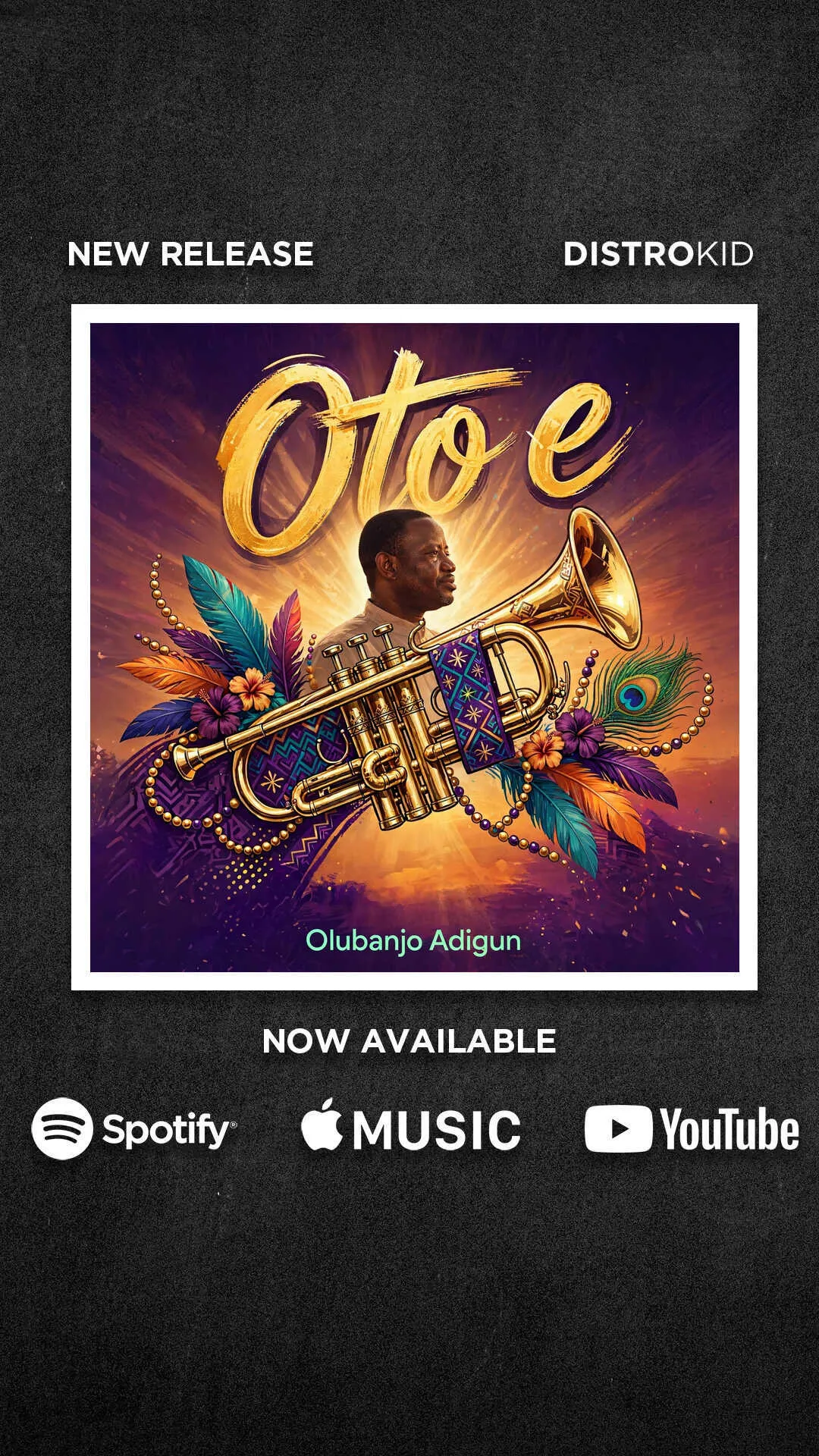
Oto e — New Single Out Now
There is a moment, right before the red light comes on, when everything goes quiet inside me. Not the silence of emptiness. The silence of purpose. I have stood in front of congregations. I have taught bodies to move to the rhythm of African music, to remember through dance what words sometimes cannot hold. I have written in the deep hours of the night, searching for the right sentence. But nothing, absolutely nothing, prepared me for what happened the first time I truly understood what a microphone could do in the hands of someone who believes. I am Olubanjo Adigun. Broadcaster. Minister. Writer. Dance teacher. Founder of Afrikans in Diaspora Radio. Those are not titles I collected. They are dimensions of one assignment. When you leave Africa, or when Africa leaves you across generations, something quiet starts to erode. Not all at once. Slowly. The way a riverbank gives way, little by little, until one day you look and the shape of the land has changed. Language softens. Rhythm gets diluted. Faith gets translated into forms that do not always carry the original frequency. Afrikans in Diaspora Radio was born from that awareness. Not from a business plan. From a burden. I understood that there were people sitting in cities far from the continent, holding two worlds inside them and not always knowing how to hold both with dignity. People who needed to hear a voice that did not ask them to choose between who they were and who they were becoming. People who needed to hear their culture honoured, their faith spoken in a tone that felt like home. The microphone became that bridge. Broadcasting, the way I practice it, is not about filling airtime. It is about filling a gap that silence was never meant to fill. Every programme I have hosted, every conversation I have led on air, has been an act of ministry. I do not separate the broadcaster from the minister. They breathe the same breath. They carry the same intention. Faith, for me, is not abstract. It is cultural. It lives in the proverbs my people speak. It lives in the way we gather, the way we eat together, the way we bury our dead and celebrate new life. When I broadcast, I am not just transmitting information. I am transmitting continuity. I am saying to every African in the diaspora, you are not lost. You are not forgotten. Your roots are still alive, and they are speaking. A career is something you build for yourself. A calling is something that builds through you. I chose the calling. Every time I sit before that microphone, I am aware that someone, somewhere, is listening not just with their ears but with something deeper. They are listening for permission to be fully who they are. Permission to be African and faithful and present in the world all at the same time. That is what I try to give. Every single broadcast. The red light comes on. And I begin.
The Microphone Was Never Just a Tool
There is a moment every African in the diaspora knows. You turn on the radio, you scroll through the stations, and you hear everything except yourself. Not your accent. Not your proverbs. Not the way your mother laughed or the way your father prayed. Just silence, dressed up as content. That silence is not an accident. It is a gap. And gaps, if you leave them long enough, become walls. I am Olubanjo Adigun. I am a broadcaster, a minister, a writer, a dance teacher, and the founder of Afrikans in Diaspora Radio. I did not stumble into this work. I was called to it. Called by the faces I saw in communities across the diaspora, people who were thriving in one sense and disappearing in another, losing the thread that connected them to who they were before the plane, before the passport, before the new address. Radio is not just entertainment. Never has been. Radio is a voice saying, you exist. Radio is a culture saying, we remember. When you hear your language spoken with confidence over airwaves, something settles in your chest that you did not even know was unsettled. That is the power I am talking about. The African diaspora is not a monolith. We are Yoruba and Igbo and Akan and Somali and Congolese and a hundred other things at once. We are also British and American and Canadian and Dutch, holding two worlds in one body every single day. That is a specific kind of weight. And it deserves a specific kind of space. Afrikans in Diaspora Radio was built to be that space. A place where the stories of our communities are told by our communities. Where the faith traditions that anchored our grandparents are honored. Where the music that moves us is not treated as exotic, but as central. Where a young African child growing up far from the continent can hear their culture spoken of with dignity and pride. Representation in media is not a bonus. It is not a nice-to-have. It is oxygen. When people do not see or hear themselves reflected in the world around them, they begin to edit themselves down. They shrink their names, soften their accents, apologize for their food. That is not integration. That is erosion. I refuse to accept that erosion as the price of belonging. Afrikans in Diaspora Radio returning to the internet is not just a platform comeback. It is a declaration. It is us saying, we are still here, we still have something to say, and we are going to say it clearly and boldly for every African family navigating life in a country that was not built with them in mind. Faith has always been at the center of this work for me. As a minister, I believe that what we build should serve people at the level of their deepest needs. Community. Identity. Belonging. Purpose. Radio, done right, reaches all of those places. This is why the African diaspora needs its own radio voice. Not a token slot on someone else's schedule. Not a special segment once a month. A home. A frequency. A voice that knows your name and says it correctly. We are that voice. And we are back.
Why the African Diaspora Needs Its Own Radio Voice
Discover more content and chat further with Olubanjo S Adigun, or on
By using this service, you agree to the Terms of Service and Privacy Policy.